Commercial Shade Houses: Scaling Protected Farming for Higher Yields
There's a clear pattern among Kenya's most consistently productive horticultural farmers right now. They're not gambling on the rains or watching their margins disappear to pest damage and sun scald. And they're not limited to two planting cycles a year. What they increasingly have in common is that they're farming under protection. Specifically, they're farming in commercial shade houses.
A commercial shade house is not simply a bigger version of a small nursery structure. It represents a deliberate scaling of protected farming into a full production system, one where the size, layout, irrigation integration, and crop management all work together to deliver consistent, high-quality yields across the year.
For farmers who are serious about horticulture as a business rather than a seasonal activity, it is quickly becoming the standard infrastructure.
What "Commercial Scale" Actually Means
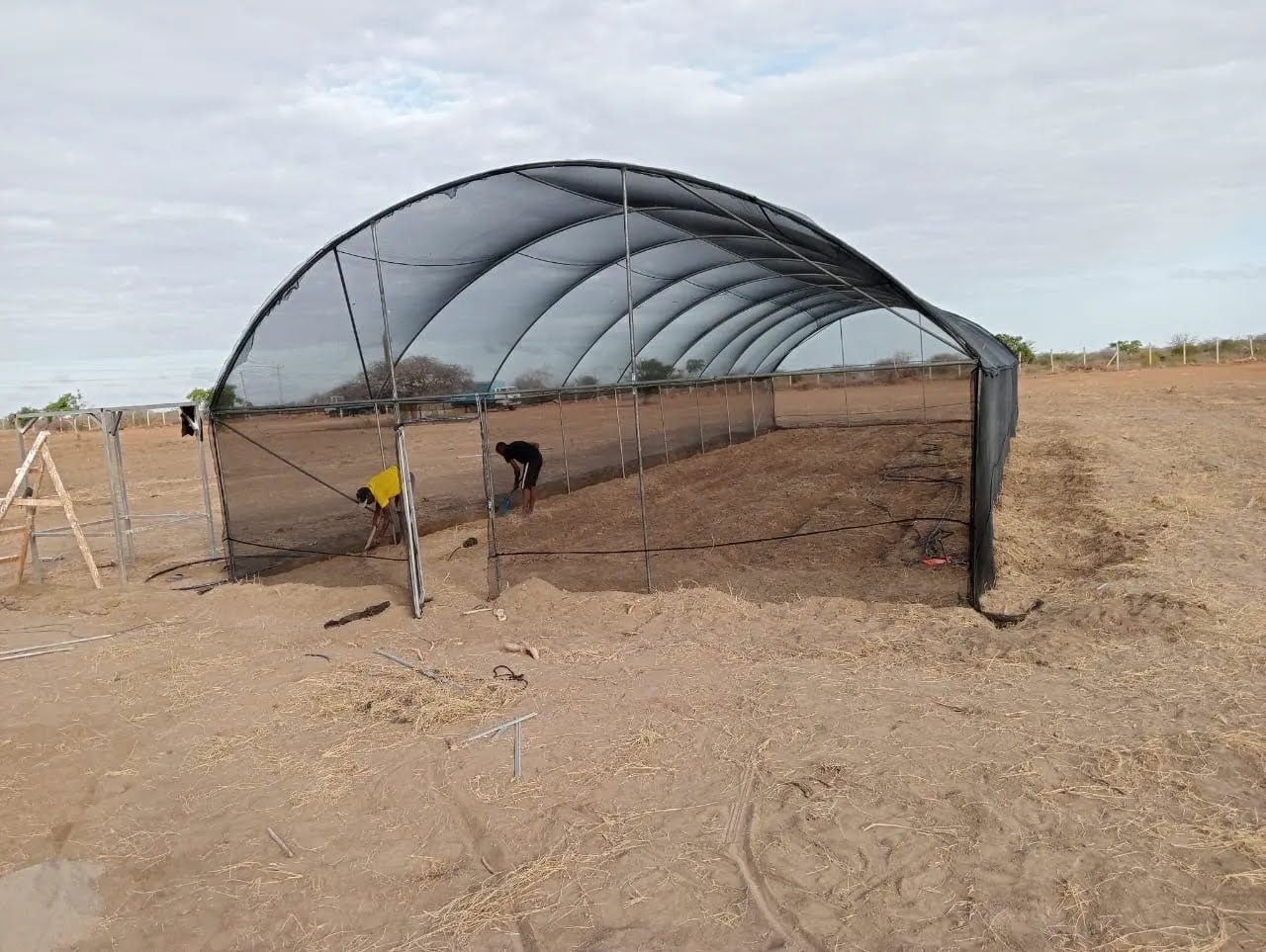
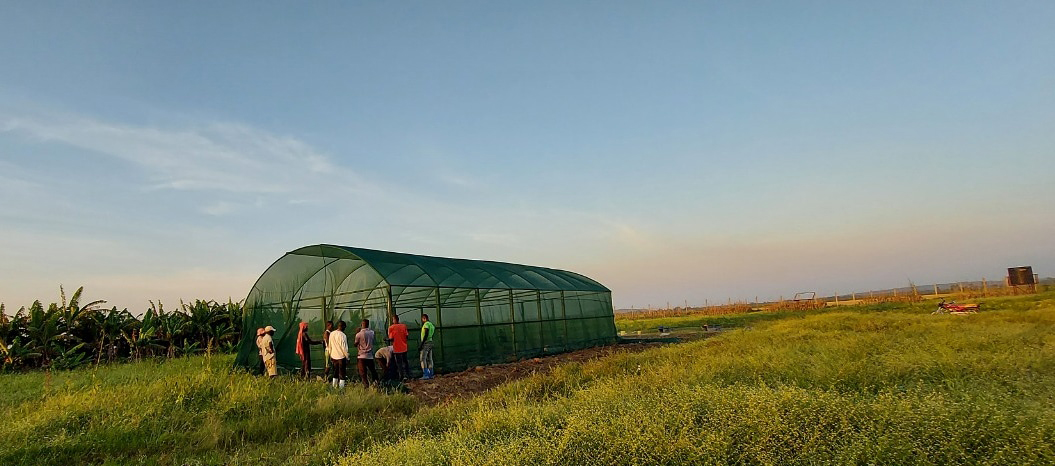
In shade house farming, commercial scale generally refers to structures covering half an acre (roughly 20 by 100 meters) and upward, though many commercial operations run multiple units side by side to cover larger total areas.
The defining characteristic is not just the size; it's the intent behind it. A commercial shade house is built to produce crops for sale as a primary income source, at volumes and quality levels that meet the demands of serious market buyers: supermarkets, hotels, processors, and export aggregators.
Commercial shade house systems provide farmers with a controlled environment that enhances crop quality and ensures more predictable and profitable harvests.
With reduced losses from pests and weather-related issues, farmers achieve higher yields, lower input costs, and more consistent income.
For a farmer operating at this scale, those aren't marginal gains; they're the difference between a viable business and one that's constantly at the mercy of conditions it can't control.
The Multi-Span Advantage
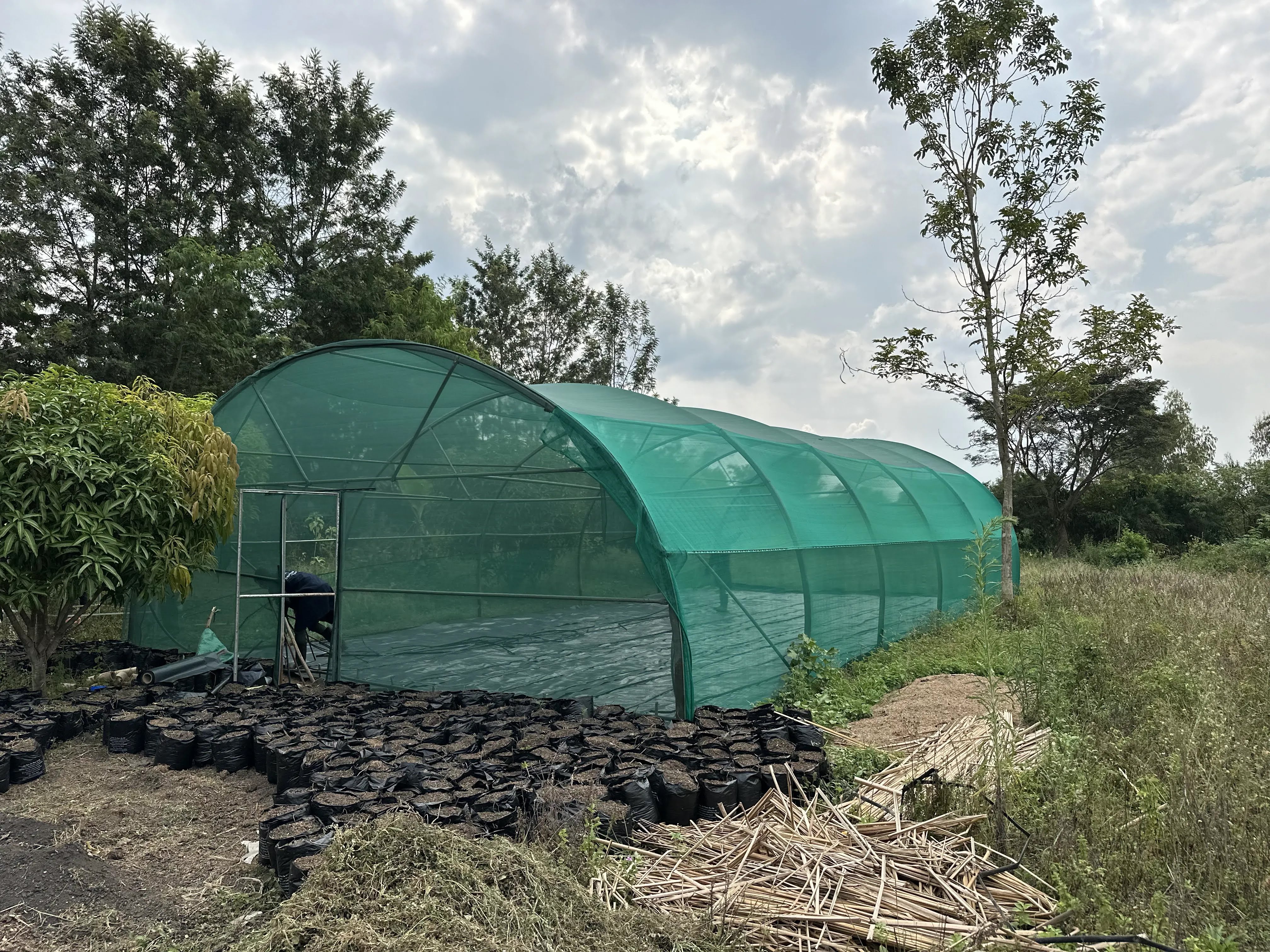
Large-scale shade house farming doesn't simply mean putting up one very large structure. In practice, commercial operations are often built as multi-span shade house systems. These are multiple tunnels or gable-roof units connected side by side, sharing walls and structural members.
The multi-span approach has real advantages over building separate standalone units. It reduces the total material cost per square meter of growing space, since shared walls eliminate the need for duplicate framing along each unit's boundary.
It creates a more uniform internal environment across the entire growing area. And it makes irrigation, labor movement, and crop management more efficient; workers and equipment move seamlessly across the full growing area rather than moving in and out of separate structures.
For commercial operations where every square meter of productive growing space matters, the multi-span configuration is the professional standard. It's how the economics of large-scale shade house farming work at their best.
Crop Volume, Quality and Market Access
The commercial shade house opens market doors that open-field farming, with its inconsistent volumes and variable quality, often can't.
Supermarket chains, institutional buyers, and export aggregators all have one requirement above everything else: consistency. They need a supplier who can deliver a predictable quantity of produce at a predictable quality standard across the year.
Open-field farming, at the mercy of two rainy seasons and everything in between, struggles to meet that bar reliably.
A well-managed commercial shade house changes that calculation entirely. Shade net farming enhances optimal growing conditions, allowing crop harvest periods to extend for up to eight months. And with proper irrigation and crop rotation scheduling, a well-run commercial operation approaches year-round supply capability.
That consistency is what makes the commercial shade house farmer the kind of supplier that buyers build long-term relationships with.
Quality is the other part of this equation. Produce grown under a commercial shade house structure arrives at market with less sun damage, less physical bruising from rain and hail, more uniform sizing, and better post-harvest shelf life.
In a market where quality determines price tier, that translates directly into better returns per kilogram, not just higher volume.
Irrigation at Commercial Scale
No commercial shade house operates without a properly designed irrigation system. At a commercial scale, drip irrigation isn't optional; it's the mechanism that makes the entire operation viable.
A commercial drip irrigation setup for a large shade house system involves a main supply line, sub-mains, and individual drip lines running the length of each growing bed.
A fertigation unit, which injects liquid fertilizer into the irrigation water at controlled rates, allows nutrients to be delivered precisely to the root zone alongside water, eliminating the labor cost and inconsistency of manual fertilizer application across a large growing area.
Automated irrigation scheduling, triggered either by timers or by soil moisture sensors, ensures the crop receives consistent moisture regardless of whether a worker is on site at any given moment.
At commercial scale, this level of precision and reliability is what separates a well-run operation from one that's always reacting to problems.
Labor and Management Efficiency
Scaling up a shade house operation means scaling up management too, and the shade house system structures make this more manageable than it might initially appear.
The enclosed nature of the growing environment, with defined bed layouts and clear access walkways, lends itself to organized, systematic crop management.
Scouting for pests, applying treatments, harvesting, and maintaining the irrigation system all follow predictable patterns when the growing space is organized well.
For commercial operations employing farm workers, the shade house environment is also meaningfully more comfortable to work in than an open field under peak afternoon sun. Workers are more productive in a shaded, ventilated environment; a small but real operational advantage that accumulates over every working day.
The Investment Case
The commercial shade house requires a serious upfront investment: more than a small structure, and with greater demands on irrigation, drainage, and site preparation. That investment needs to be evaluated against what it returns.
The initial investment in a shade house is a primary concern for many farmers, but understanding the potential returns makes it a calculated risk.
Even a modest setup like a nursery shade house can quickly pay for itself, and compared to open-field farming, where yields are inconsistent, a shade house offers year-round production. At commercial scale, with higher volumes, better quality produce, and access to premium buyers, the return on investment is typically faster and more substantial than at small scale.
Original Reliable Shade Houses in Nairobi, Kenya at Irrihub Ke, +254 112 148 880
If you are looking to buy reliable, high-quality shade houses in Kenya, Irrihub has nice offers you may consider. We sell shade houses and other growing solutions as independent units or as complete solutions (kits). The complete shade house solutions include:
- Full galvanized steel shade house structure
- UV-treated shade net
- Entry porch
- Complete drip irrigation system
- Quality water tank (size varies by tier)
- Professional installation by IrriHub-trained technicians
- Farmer training on shade house management and irrigation operation
- After-sales support from the IrriHub team
- 2-year warranty on structure and materials
Bottom Line
The farmers who have committed to commercial shade house farming in Kenya are not looking back. The structure changes what's possible: the volume, the quality, the market relationships, and ultimately the profitability. It's infrastructure for a farming business, not a farming gamble.