Greenhouse Benefits: Advantages And Challenges for Kenyan Farmers
Every farmer considering greenhouse farming often starts by weighing the greenhouse benefits against its challenges. Greenhouse farming has a reputation. Ask any Kenyan farmer who's heard of it, and you'll get some version of the same two reactions: either "that's where the real money is" or "I know someone who tried it and lost everything."
Both reactions contain truth, which is exactly why the honest conversation about greenhouse benefits needs to include the full picture: the real advantages that make this technology so compelling, and the real greenhouse challenges that catch too many farmers off guard.
If you're considering investing in a greenhouse, what follows is the most useful thing you'll read before making that decision.
What a Greenhouse Actually Does
At its core, a greenhouse is an environmental management tool. The polythene cover used in this structure traps heat and diffuses light, the enclosed structure keeps out wind, heavy rain, birds, and flying insects, and together these properties create a growing environment that is partially independent of whatever the weather outside is doing.
That independence is the source of most of the greenhouse benefits; and, as we'll see, some of the challenges, too.
The Real Greenhouse Farming Advantages
Year-round production. This is the greenhouse benefit that changes the economics of farming most fundamentally. Open-field vegetable farming in Kenya is heavily tied to two rainy seasons. A greenhouse, paired with drip irrigation, breaks that dependency entirely.
You can plant, grow, and harvest across all twelve months, which means more selling cycles per year, and the ability to supply buyers during the dry months when open-field supply drops and market prices rise.
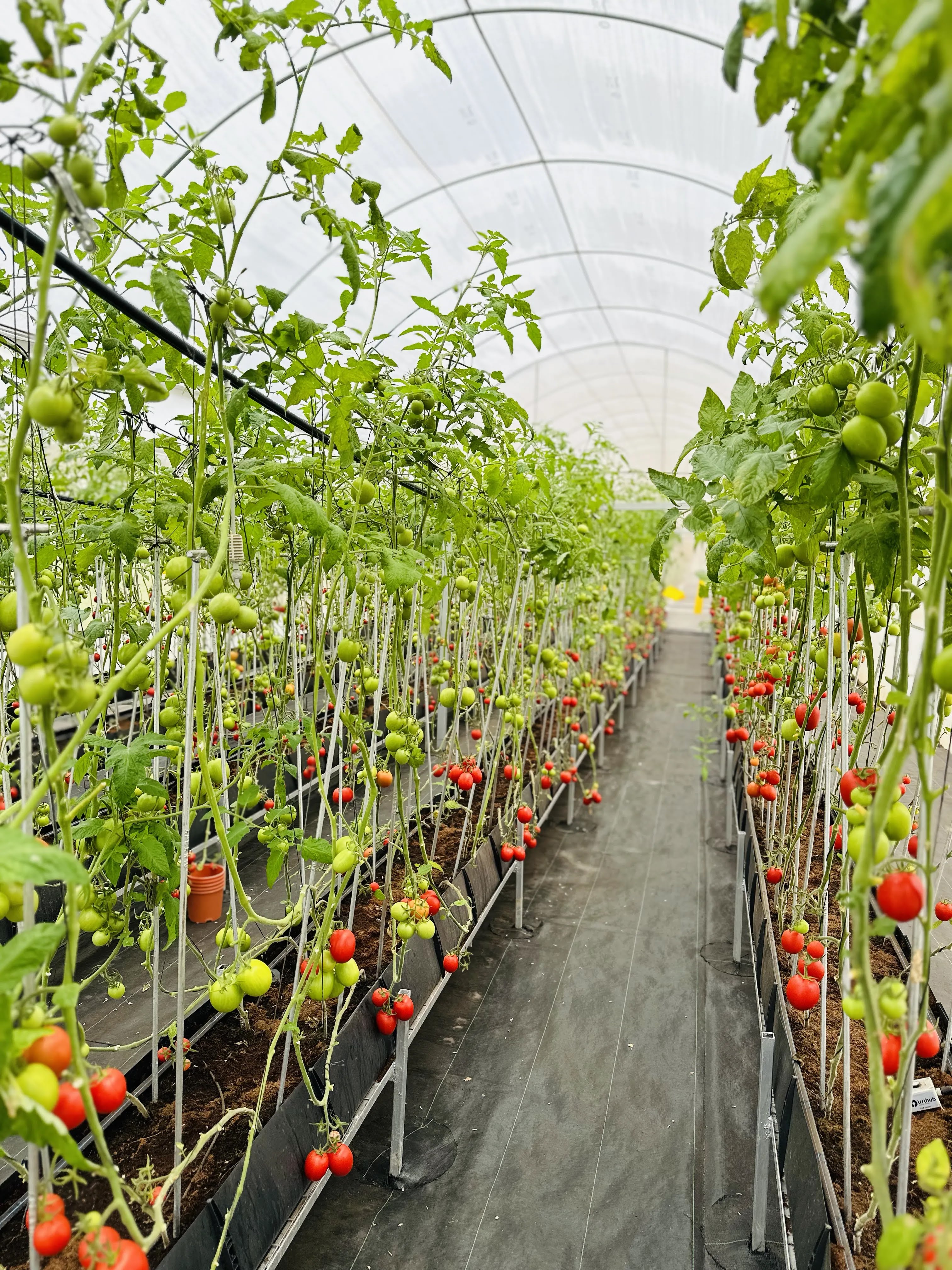
Significantly higher yields. Controlled environmental conditions, including regulated temperature, managed humidity, and consistent moisture through drip irrigation, allow crops to grow closer to their genetic potential than open-field conditions typically allow.
Greenhouse farming has increased crop yields by up to 50% compared to conventional open-field production. For high-value crops like tomatoes and capsicum, the improvement in yield consistency is often just as valuable as the increase in volume.
Pest and disease barrier. A well-constructed greenhouse with insect netting on the ventilation openings significantly reduces the entry of whiteflies, thrips, aphids, and other common horticultural pests.
This reduction in pest pressure means fewer spray cycles, lower pesticide costs, and produce that's easier to keep within the residue limits that supermarkets and export buyers require.
It doesn't eliminate pest and disease management, but it changes it from a constant emergency to something far more manageable.
Water efficiency. Greenhouse farming typically involves using drip irrigation kits that deliver water directly to the root zone of each plant.
Combined with the polythene cover, which eliminates rainfall from the growing equation and reduces soil evaporation significantly, greenhouse production uses water far more efficiently than open-field growing.
In a country where water access is a real constraint for many farmers, particularly in the drier months, this matters enormously.
Better produce quality and market access. Crops grown inside a greenhouse are protected from the physical damage that open-field growing exposes them to: hail, heavy rain, wind, and direct sun damage.
The result is more uniform produce with better color, better shelf life, and less bruising; exactly the quality profile that supermarkets, hotels, and export buyers specify. Consistent quality opens doors to premium buyers that open-field produce often can't reliably access.
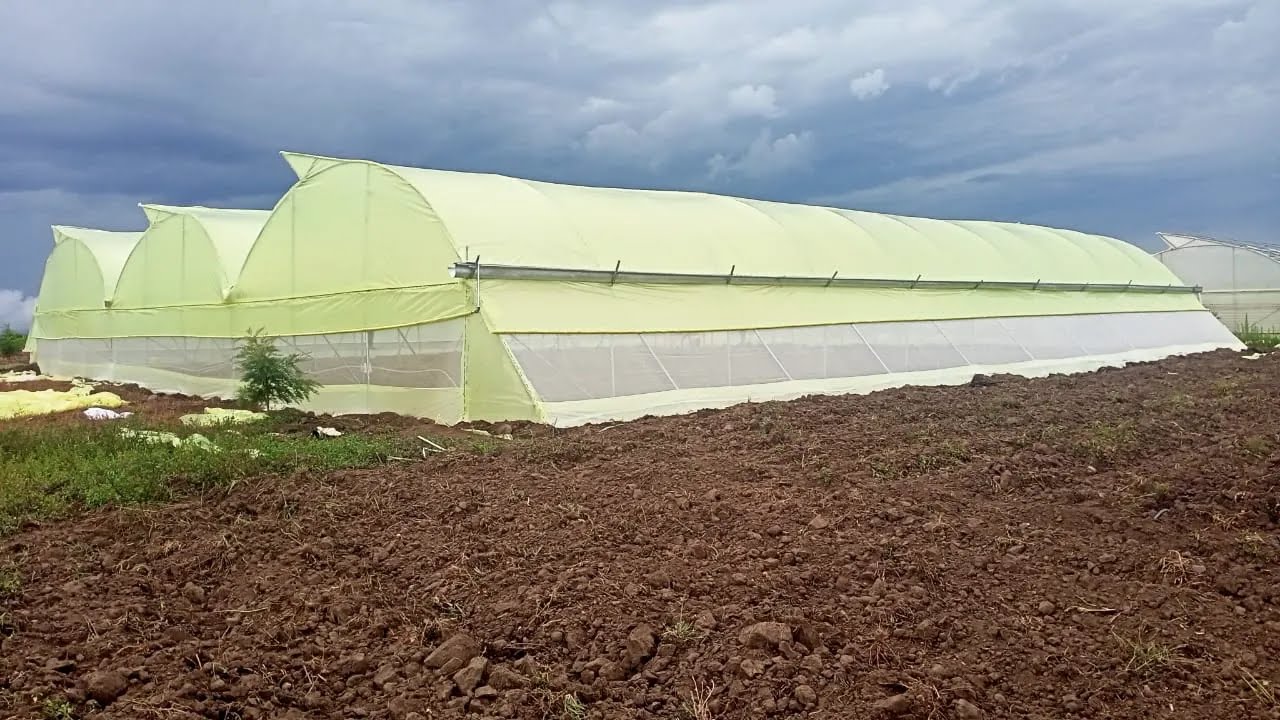
An outdoor greenhouse works in more locations. A heavy-duty outdoor greenhouse structure, built on a galvanized steel frame with quality polythene cover, is designed to withstand Kenya's weather across varying agroclimatic zones, extending viable vegetable production to locations that would otherwise face significant climate limitations.
The Real Greenhouse Challenges
This is the part of the conversation that doesn't get enough attention, and it should, because greenhouse farming in Kenya has a significant failure rate.
Research in Kisii County found that 48.6% of greenhouses surveyed were non-functional, and failure rates among smallholder greenhouse farmers across Kenya range from 30% to 70% in some studies.
Understanding why will go a long way in helping you avoid the same fate.
The upfront investment is substantial. A quality greenhouse structure, cover, drip irrigation system, and installation represent a meaningful capital outlay that many small-scale farmers find difficult to manage.
The initial cost is consistently ranked among the top challenges by Kenyan greenhouse farmers, and trying to reduce it by cutting corners on materials or skipping the irrigation system creates problems that tend to cost far more later.
Pests and diseases don't disappear; they change. This surprises many first-time greenhouse farmers. The enclosed environment that limits flying pest entry can also create warm, humid conditions in which certain diseases thrive if ventilation is inadequate.
The top greenhouse challenge identified by greenhouse farmers in Kenya is pests and diseases, and the ones that establish inside a greenhouse can spread very quickly through the entire crop. Greenhouse pest and disease management is a specific skill set, and farmers who don't develop it quickly enough ultimately pay for it in crop losses.
Water supply must be reliable. The greenhouse's dependence on drip irrigation means that an unreliable water source is an immediate production risk.
Inadequate water supply is the second-ranked greenhouse challenge for Kenyan farmers, and for farmers in drier regions, this is not a theoretical concern. A reliable water source is a prerequisite for viable greenhouse production, not an optional extra.
It demands active management. Open-field farming has a degree of forgiveness built in: miss a day, and the crop often waits. A greenhouse requires consistent attention: ventilation must be managed as temperatures change through the day, irrigation scheduling must be maintained, and pest scouting must happen regularly.
Research ranks insufficient knowledge on greenhouse crop farming as fourth among Greenhouse challenges, and it's one that's directly within a farmer's control to address before setting up.
The wrong crop choice limits returns. Not every crop suits a greenhouse environment. Crops that do well in the open field aren't always the most profitable choice inside a structure whose cost needs to be justified.
High-value crops such as tomatoes, capsicum, cucumber, French beans, and baby corn are the ones whose returns typically justify the investment in a greenhouse. Filling a greenhouse with lower-value crops because they're familiar is a common mistake you don’t want to commit.
Original Reliable Greenhouses in Nairobi, Kenya at Irrihub Ke, +254 112 148 880
If you are looking to buy reliable, high-quality greenhouses in Kenya, Irrihub has some nice offers you may consider. We sell greenhouses and other growing solutions as independent units or as complete solutions (kits). The complete greenhouse solutions include:
- A galvanized steel structure
- 200-micron polythene cover (clear or yellow)
- Zig-zag fastening wires to hold the cover against the wind
- Roll up side ventilation with white insect net
- Entry porch
- Full drip irrigation system
- Water tank (size depends on greenhouse tier)
- 2-year warranty on structure and materials
- Optional crop support structure for climbing crops
Final Thoughts
Greenhouse farming is not a passive investment or a guaranteed windfall. It rewards farmers who bring three things to the structure: a reliable water source, a serious commitment to learning the management skills it requires, and a clear plan for where their produce will be sold.
For farmers who come prepared in those three ways, the greenhouse benefits are as substantial as the technology's reputation suggests. For those who don't, the challenges are equally real. The gap between the two groups isn't luck; it's preparation against known greenhouse challenges.