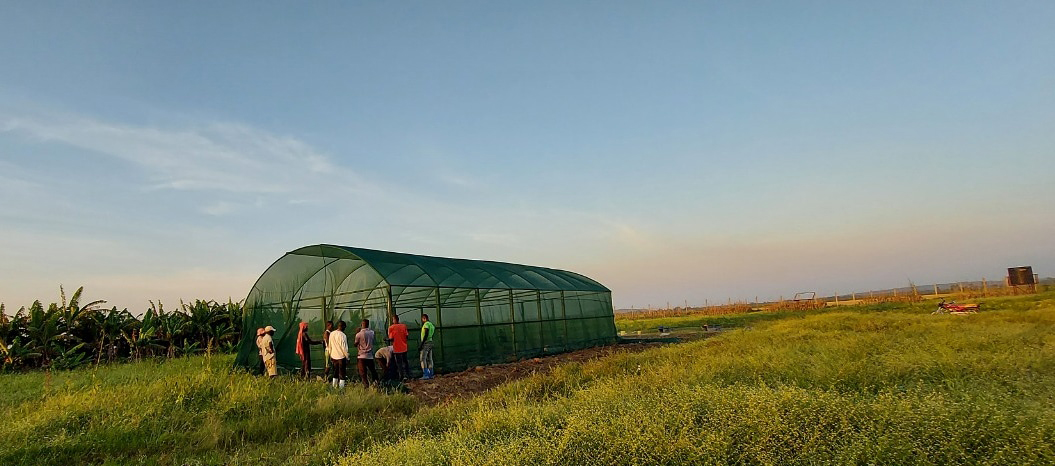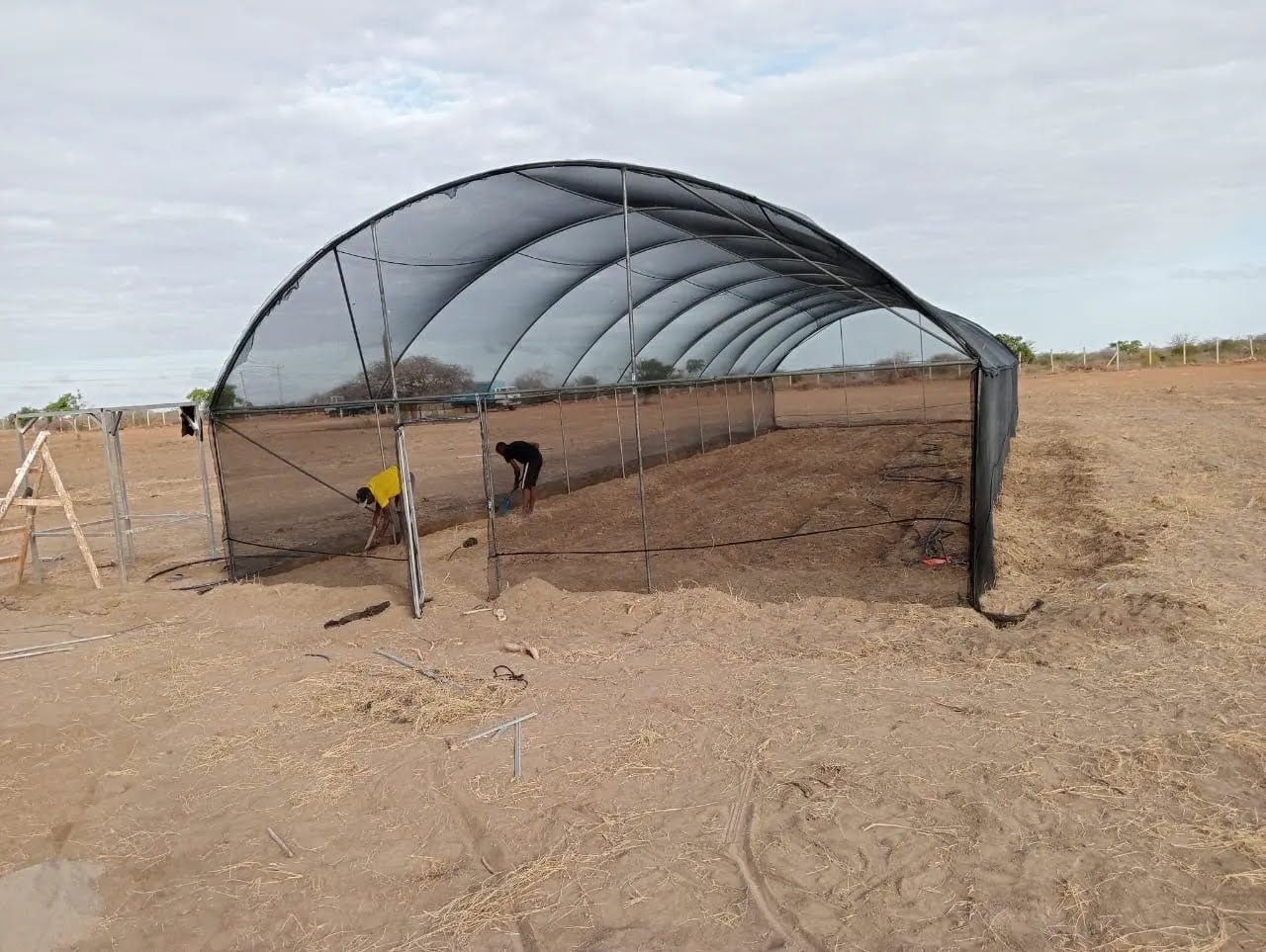
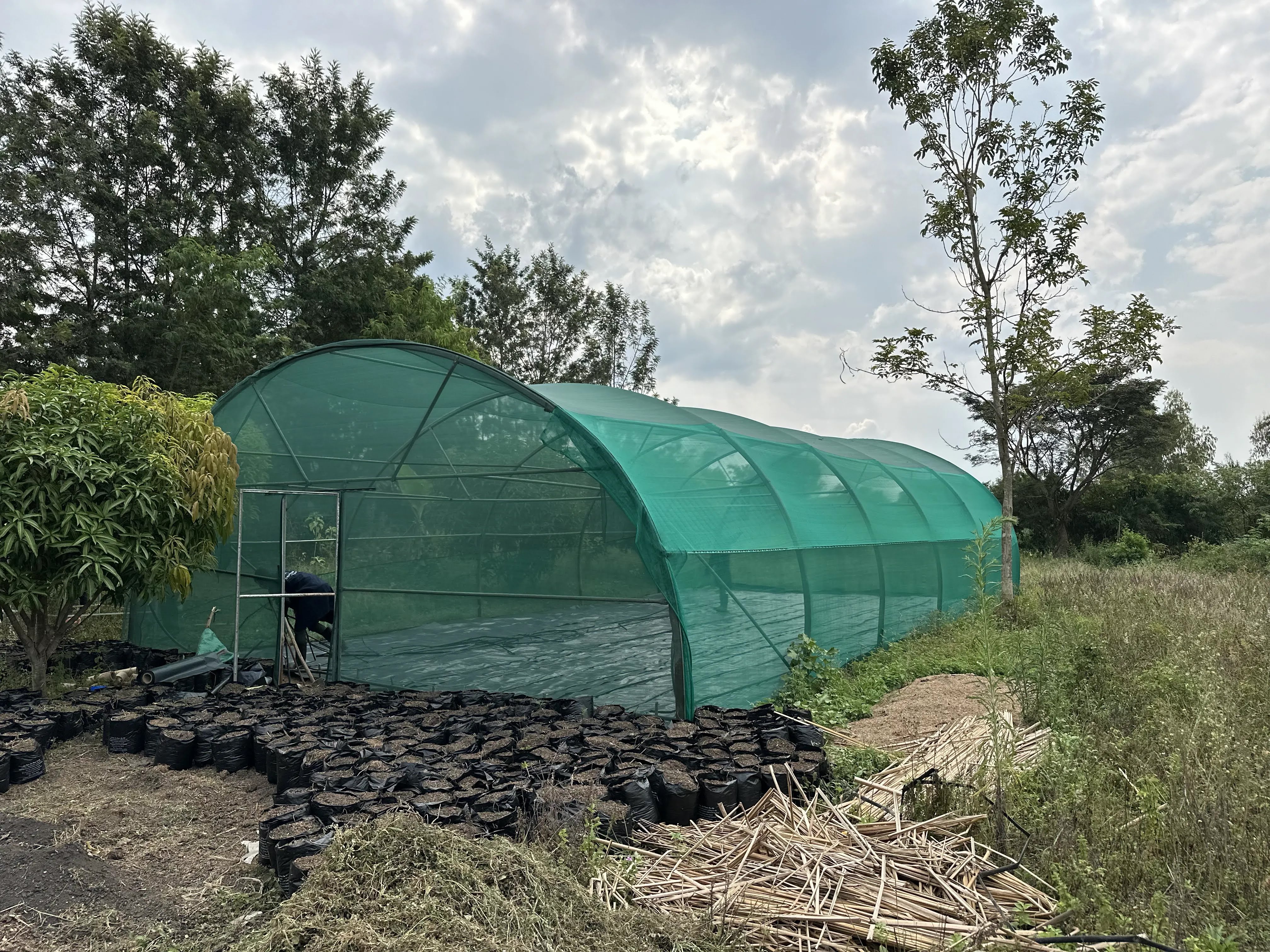
Shade House Cost in Kenya: Materials, Installation and ROI
One question that most farmers, especially in commercial farming, actually want answered is, how much does a shade house cost in Kenya, and is it worth it?
The honest answer to both parts is: it depends, but in a way that's actually useful to understand, because the variables that affect the cost are the same ones that determine the return. Once you understand what drives the cost, you can make a smarter buying decision and go in with realistic expectations about what your investment will give back.
Here's a clear breakdown of what you're paying for, and how to think about whether shade house cost in Kenya makes financial sense for your farm.
What Drives Shade House Cost in Kenya
The shade house cost in Kenya primarily depends on three main cost components: the frame, the net, and the installation. Each varies depending on the choices you make.
The frame. This is the most durable component and the one most worth spending on properly. Galvanized steel frames are the professional standard, with the galvanization process protecting the steel against rust in a farming environment where moisture from irrigation and rain is constant.
Common frame materials include galvanized steel pipes or treated timber poles for shade house structure support. Galvanized steel costs more upfront than timber, but it lasts significantly longer with minimal maintenance, typically 15 to 20 years, making it the more economical choice over the full life of the structure.
Timber is cheaper initially but deteriorates faster, particularly in contact with moist soil, and may need replacement within five to seven years.
The shade net. This is the second major shade house cost component. The cost of shade nets in Kenya per square meter varies with filtration level: around KES 65 for 35%, KES 95 for 55%, KES 130 for 75%, and KES 180 for 90% shading.
The higher the shade percentage, the higher the material cost, but the choice should be driven by what your crops need, not by what's cheapest. Using the wrong shade density costs you in yield performance, which is a larger loss than the marginal difference in net price.
Net quality matters enormously here. A high-quality UV-stabilized net can last five to seven years, or even longer with proper maintenance. A low-quality shade net that degrades in two to three years and needs replacing is not a bargain; it's a recurring cost that quickly exceeds what a quality net would have cost in the first place.
Installation. Shade house installation covers labor, concrete for anchor footings, hardware, and the irrigation system if included. Professional installation by an experienced team, with properly dug and concreted anchor points, correctly tensioned netting, and integrated drip irrigation, adds to the upfront cost but prevents the far more expensive problems that come from a poorly installed structure: leaning poles, sagging nets, drainage problems, and premature component failure.
Indicative Cost Ranges
Shade house cost in Kenya varies significantly with size and specification for a complete shade house structure.
The cost of shade net farming in Kenya is anywhere between KES 25,000 and KES 150,000, depending on the size, shade net type, and structure type.
This range reflects the difference between a small basic structure with a timber frame and a professionally built galvanized steel shade house with full irrigation integration.
For a serious farming investment, a mid-sized shade house on a galvanized steel frame, with quality netting and a drip irrigation system included, expect to budget from around KES 100,000 upward, depending on size.
Commercial-scale multi-span structures will cost considerably more, but the cost per square meter comes down as the total area increases.
What the Investment Returns
The shade house cost question is only half the story. The other half is what that cost gives back, and on this front, the picture for Kenyan farmers is consistently positive.
Most farmers find they can break even within two to three seasons, making it a sound long-term investment. For high-value crops, the payback can be faster. For high-value crops such as herbs, salad greens, and floriculture, shade netting often pays for itself within a single season.
The returns come from multiple directions simultaneously. Crop losses from pests, weather damage, and sun stress drop significantly. Temperature monitoring in Kenya shows consistent reductions of around 10°C under 50% shade nets compared to open fields during peak afternoon hours, which directly reduces heat stress losses on flowering crops.
Water use drops, too. Less direct sun means slower evaporation, and shade house farming typically uses significantly less irrigation water than equivalent open-field production for the same yield.
Produce quality improves, which translates into better market prices. Vegetables grown under shade are more uniform, less sun-damaged, and longer-lasting post-harvest, all factors that push your produce into a higher price tier at market.
And the shade house makes year-round production viable, which means more selling cycles per year rather than clustering production around two rainy seasons.
A key takeaway from farmers who have made the transition is that success requires more than just the structure. It demands good management practices, an understanding of market demands, and a willingness to learn. The shade house creates the conditions for better production; what you do inside it determines the actual return.
Original Reliable Shade Houses in Nairobi, Kenya at Irrihub Ke, +254 112 148 880
If you are looking to buy reliable, high-quality shade houses in Kenya, Irrihub has nice offers you may consider. We sell shade houses and other growing solutions as independent units or as complete solutions (kits). The complete shade house solutions include:
- Full galvanized steel shade house structure
- UV-treated shade net
- Entry porch
- Complete drip irrigation system
- Quality water tank (size varies by tier)
- Professional installation by IrriHub-trained technicians
- Farmer training on shade house management and irrigation operation
- After-sales support from the IrriHub team
- 2-year warranty on structure and materials
Getting the Cost Right from the Start
The single most effective thing you can do to manage shade house cost is to build it right the first time. Underspecifying the frame, choosing a low-quality net, or skipping the drip irrigation in order to keep the initial outlay down tends to cost more over time, in repairs, replacements, and missed yield potential, than the money saved at the start.
Work with a supplier who will assess your site, understand your crop plan, and specify a structure that fits both, rather than selling you whatever happens to be in stock.
The shade house is a long-term fixture on your farm. The cost you pay today is the foundation of what you produce for the next decade.