Walk around enough farms in Kenya, and you start to notice that "greenhouse" isn't a single thing, which brings us to greenhouse structure types on the Kenyan market.
There are the familiar tunnel-shaped polytunnels you'll see on smallholder plots in Kiambu and Nakuru. There are taller, more upright structures on commercial farms that produce for export. Then there are compact structures attached to walls, multi-span configurations covering a full acre, and simple hoop structures that a farmer built themselves over a weekend.
These are all greenhouses, but they're not all the same. And the differences matter far more than most farmers realize before they invest.
Understanding greenhouse structure types before you spend a single shilling is not an academic exercise. The design you choose determines what crops you can grow, how well you can manage heat, how efficiently you use your land, and how many years the structure serves you reliably.
Here is a clear breakdown of the main greenhouse structure types and what makes each one the right or wrong fit for different farming situations.
The Tunnel Greenhouse
This is the greenhouse structure type that most Kenyan farmers think of first, and for good reason. If you know a polytunnel, then you know what we are talking about.
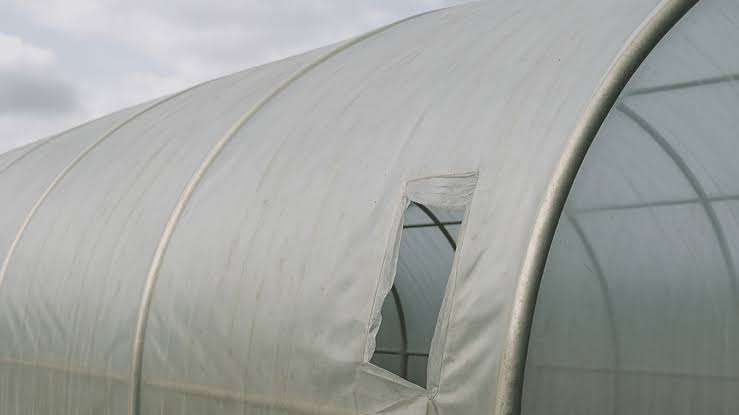
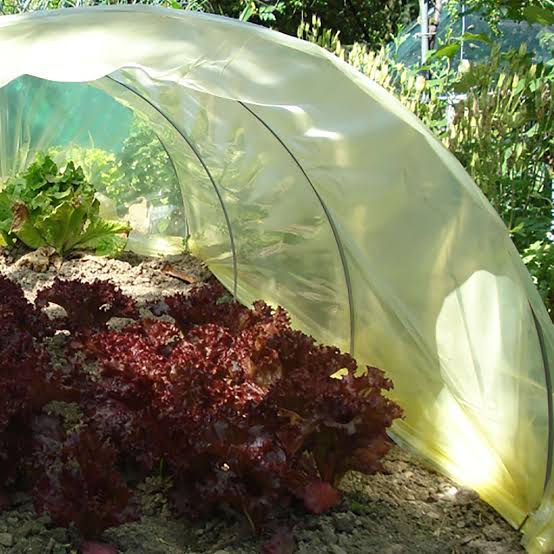
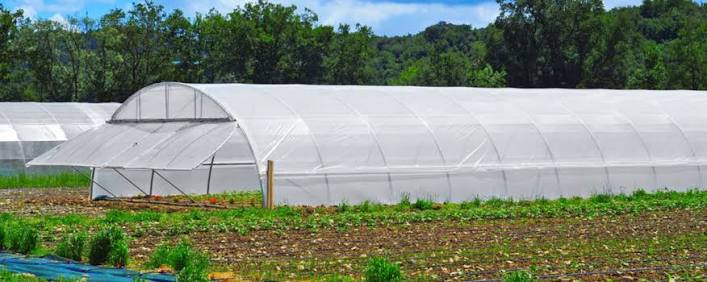
It is by far the most widely adopted design at smallholder and medium scale. The tunnel greenhouse, sometimes called a Quonset structure, consists of a series of curved steel hoops covered in UV-treated polyethylene film, forming a continuous semi-circular arch from one end to the other.
Its dominance comes down to a combination of qualities that are hard to beat at its price point: it is affordable, straightforward to assemble, structurally sound under normal wind and rain loads, and effective at creating the protected microclimate that crops need.
The limitation is height and internal headroom near the sides. The semicircular profile slopes steeply from the peak to ground level, which reduces the usable growing width in proportion to the total span.
For low-growing crops such as capsicum, herbs, and leafy vegetables, this is rarely a problem. For tall indeterminate tomatoes on a full vertical trellis, the low sides begin to limit how effectively the full width of the structure is used.
The Gothic Arch Greenhouse
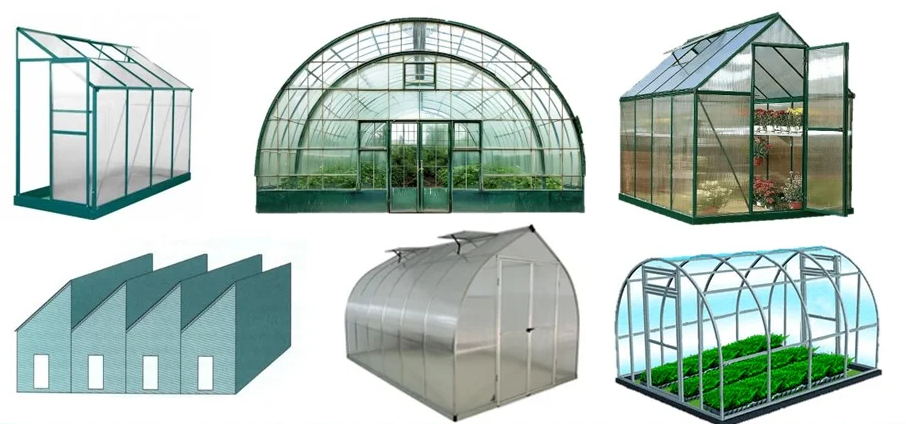
The gothic arch is a close relative of the tunnel greenhouse, with one key difference: the arched roof comes to a pointed peak rather than a smooth semicircle. This steeper, more angular profile gives the gothic arch several practical advantages over the standard tunnel.
The pointed roof sheds rain more aggressively and is more resistant to strong winds, thanks to the way its shape distributes load.
The steeper walls also provide more usable headroom along the sides than a Quonset structure with the same base width, so more of the floor area can accommodate taller crops.
Gothic arch designs generally offer more headroom at the shoulder and shed precipitation more easily than rounded hoop houses.
For Kenyan farmers in areas prone to strong seasonal winds, or for those wanting to grow taller crops across the full width of the structure, the gothic arch offers a meaningful upgrade over the standard tunnel at a modest increase in cost.
The Gable Roof Greenhouse
The gable roof greenhouse structure types, sometimes called an even-span or A-frame greenhouse, move away from the curved tunnel profile entirely.
This greenhouse structure type features vertical side walls topped by a steeply pitched, two-sided roof that meets at a central ridge. The result looks more like a conventional building than a tunnel, and this structural difference has real practical implications.
Straight vertical walls maximize usable interior headroom across the full width of the structure. Equipment can be moved along the sides without the clearance limitations of a curved profile.
The design is structurally more rigid and lends itself well to permanent installations with mechanical ventilation, ridge vents, and heavier covering materials like polycarbonate or glass.
The trade-off is cost. Gable roof greenhouses are more complex to construct than tunnel designs, requiring more frame components and more precise assembly. They are better suited to serious permanent installations than to first-time or budget-conscious setups.
The Lean-To Greenhouse Structure Types
The lean-to is a fundamentally different type of greenhouse structure in one specific way: it is attached to an existing building rather than standing freely. One wall of the greenhouse is shared with an existing structure, which means the lean-to needs only three sides and a single-sloped roof to create an enclosed growing space.
This shared wall significantly reduces material costs, since one entire side is already provided. It also gives the greenhouse access to whatever infrastructure the host building offers: water connections, electricity, and in cooler areas, residual heat from the building itself.
A lean-to is a great option for urban or peri-urban growers with limited outdoor space, as well as for farmers who want to add a small protected growing area without committing to a full freestanding structure.
The obvious limitation is size. The lean-to is constrained by the length and height of whatever wall it's attached to, which caps how large the structure can be.
The Multi-Span Greenhouse
Multi-span greenhouses link multiple tunnel, gothic arch, or gable-roof units side by side into a single continuous greenhouse structure, sharing side walls at each connection point. Rather than building several standalone units and managing them individually, the multi-span combines them into a single, interconnected production environment.
The advantages of this approach compound as the total area grows. Multi-span greenhouses have a smaller surface area than a number of single-span greenhouses with equivalent production capacity, resulting in lower material costs per square meter of growing space.
Installation of drip irrigation is also cheaper and more straightforward in a single structure.
Multi-span designs tend to be more structurally robust. They are typically more stable and wind-resistant than individual single-span units.
For commercial-scale vegetable, flower, or herb production in Kenya, the multi-span greenhouse is the serious farmer's choice.
Original Reliable Greenhouses in Nairobi, Kenya at Irrihub Ke, +254 112 148 880
If you are looking to buy reliable, high-quality greenhouses in Kenya, Irrihub has some nice offers you may consider. We sell greenhouses and other growing solutions as independent units or as complete solutions (kits). The complete greenhouse solutions include:
- A galvanized steel structure
- 200-micron polythene cover (clear or yellow)
- Zig-zag fastening wires to hold the cover against the wind
- Roll up side ventilation with white insect net
- Entry porch
- Full drip irrigation system
- Water tank (size depends on greenhouse tier)
- 2-year warranty on structure and materials
- Optional crop support structure for climbing crops
Final Thoughts on Greenhouse Structure Types
No single greenhouse structure type is right for every situation. The choice depends on the interplay between what you're growing, the scale of your operation, your land and budget constraints, and how long you intend to farm in the structure.
A first-time greenhouse farmer on a half-acre plot growing tomatoes and capsicum will almost always be best served by a well-built tunnel or gothic arch greenhouse.
A farmer scaling up to a full-acre commercial vegetable operation should consider multi-span configurations.
An urban grower with limited yard space and an existing wall has a ready-made case for a lean-to greenhouse structure type.
A farmer who needs the maximum internal working height and structural permanence is pointing toward a gable roof design.
The right greenhouse structure type is not the most impressive-looking or the cheapest. It is the one that best matches your farm's actual needs.