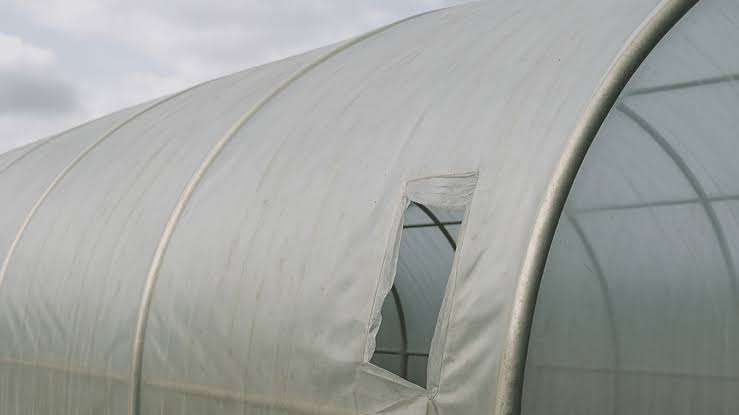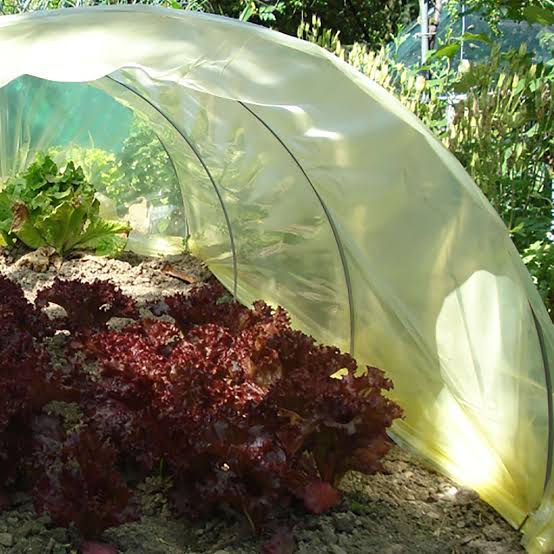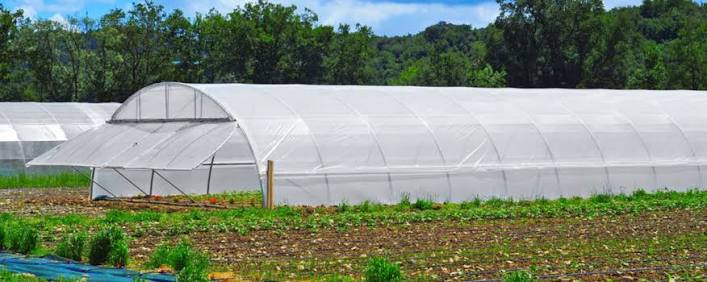
If you've spent any time researching protected farming in Kenya, you have most likely encountered both terms: polytunnel and high tunnel greenhouse. They look similar in photographs, they're both covered in polythene, and they're often described in ways that make them sound interchangeable.
They're not. And understanding the difference between a high tunnel greenhouse and a polytunnel is worth the time, because choosing the wrong structure for your crops and your farming scale is a mistake that shows up in your yields and your income for years afterward.
This article explains exactly what a high tunnel greenhouse is, how it differs from a standard polytunnel, and when each makes more sense for a Kenyan farming operation.
High Tunnel Greenhouse Height and Its Role
The clearest way to understand the difference between a high tunnel greenhouse and a polytunnel is to look at what the height of the structure makes possible.
A standard polytunnel is a low-profile tunnel structure. Its curved steel hoops create a semi-circular profile that gives adequate headroom in the center, typically around 2 to 3 meters at the apex, but slopes steeply to relatively low sides.
You can walk upright in the middle, work along the central beds comfortably, and grow most vegetable crops without issue. What you can't do easily is move equipment through it, grow very tall indeterminate crops on a full vertical trellis without the plants pressing against the cover near the sides, or work across the full width of a wide structure at comfortable standing height.
A high tunnel greenhouse, by contrast, is designed with a significantly taller and often more vertical sidewall profile before the roof arc begins. The eave height, the point where the sidewall meets the roof, is raised to 2 meters or more, giving the structure a more upright, barn-like internal space.
The overall center height of a high tunnel greenhouse can reach 4 to 5 meters in larger configurations.
High tunnel greenhouses, as the name suggests, are more robust structures with higher arches, allowing workers and larger agricultural machinery to operate inside them. This distinction in internal volume and accessibility is what makes the high tunnel greenhouse a different category of structure, not merely a bigger polytunnel.
What To Expect with The Additional Height
As you might expect, the extra height is not for nothing. There are a couple of benefits to having those additional 2 to 3 meters under the hood. Let’s look at them in detail.
Trellising and tall crop production. Indeterminate tomato varieties, the type that just keep growing, flowering, and fruiting throughout the season rather than setting one harvest and stopping, are among the most profitable crops in Kenyan greenhouse farming.
To reach their potential, they need to be trellised vertically with a string or wire system, and they need height to climb into as the season progresses.
A high tunnel greenhouse provides the internal clearance that allows tomato plants to be trained upward to heights of 3 meters or more, considerably extending each plant's productive season and making indeterminate varieties commercially viable in ways that a low-profile polytunnel limits.
Airflow and heat management. In Kenya's warm climate, one of the biggest management challenges inside any protected structure is controlling heat buildup during the middle of the day.
The greater internal air volume of a high tunnel greenhouse creates a meaningful buffer. Combined with ridge vents or roll-up sides, the additional height of a high tunnel greenhouse gives ventilation options that a low polytunnel simply doesn't have the geometry to support.
Greater equipment and labor access. In a standard polytunnel greenhouse, all soil preparation, bed establishment, irrigation installation, and crop management is done by hand with handheld tools.
The low sides limit what equipment can be brought in and maneuvered comfortably. High tunnels are designed for equipment access. You can comfortably bring in a wheelbarrow, a powered sprayer, or compact farm machinery and move it through the structure without the constant ducking and maneuvering that a low-profile tunnel demands.
Original Reliable Greenhouses in Nairobi, Kenya at Irrihub Ke, +254 112 148 880
If you are looking to buy reliable, high-quality greenhouses in Kenya, Irrihub has some nice offers you may consider. We sell greenhouses and other growing solutions as independent units or as complete solutions (kits). The complete greenhouse solutions include:
- A galvanized steel structure
- 200-micron polythene cover (clear or yellow)
- Zig-zag fastening wires to hold the cover against the wind
- Roll up side ventilation with white insect net
- Entry porch
- Full drip irrigation system
- Water tank (size depends on greenhouse tier)
- 2-year warranty on structure and materials
- Optional crop support structure for climbing crops
Conclusion: Which Structure for Which Farmer?
The choice between a standard polytunnel and a high tunnel greenhouse comes down to three things:
- What you're growing
- The scale of your operation
- How long you intend to run it
A standard polytunnel is well-suited to farmers taking their first step into protected farming, those growing determinate crop varieties or shorter-season crops, operations where the primary benefit being sought is weather and pest protection rather than full production optimization.
It is also the better choice for smaller land areas where the footprint of a high tunnel structure would be disproportionate to the production scale.
On the other hand, a high tunnel greenhouse makes more sense for established farmers scaling up production, for those growing indeterminate tomatoes or other tall crops on a trellis system, for operations where labor efficiency inside the structure matters to the economics, and for farmers in hotter lowland or midland areas where the additional ventilation capacity of a taller structure is necessary to better crop performance.
Both structures are built on the same core principle: a steel frame, a UV-treated polythene cover, and drip irrigation inside, but the high tunnel greenhouse takes that principle further, creating an environment that supports a wider range of crops at a higher level of production intensity.
For the right operation, that difference is significant.