Off-Grid Water Pump Solutions: Reliable Solar Options for Farms
Access to reliable water for irrigation, livestock, and domestic use is one of the biggest challenges that farmers face across Kenya, especially in remote areas where electricity is unavailable or unreliable. By allowing farmers to draw and distribute water without depending on the national power grid, an off-grid water pump offers a practical solution.
With Kenya’s agricultural sector employing more than 40 percent of the population and over 70 percent of the rural populace, a shift toward solar-powered systems benefits a significant segment of the population.
This article examines how off-grip water pump solutions work, what options are available to Kenyan farmers at different scales, and their uses and benefits. Read along.
What Is an Off-Grid Water Pump System?
An off-grid water pump is simply a system that operates independently of grid electricity, relying instead on alternative energy sources, most commonly solar.
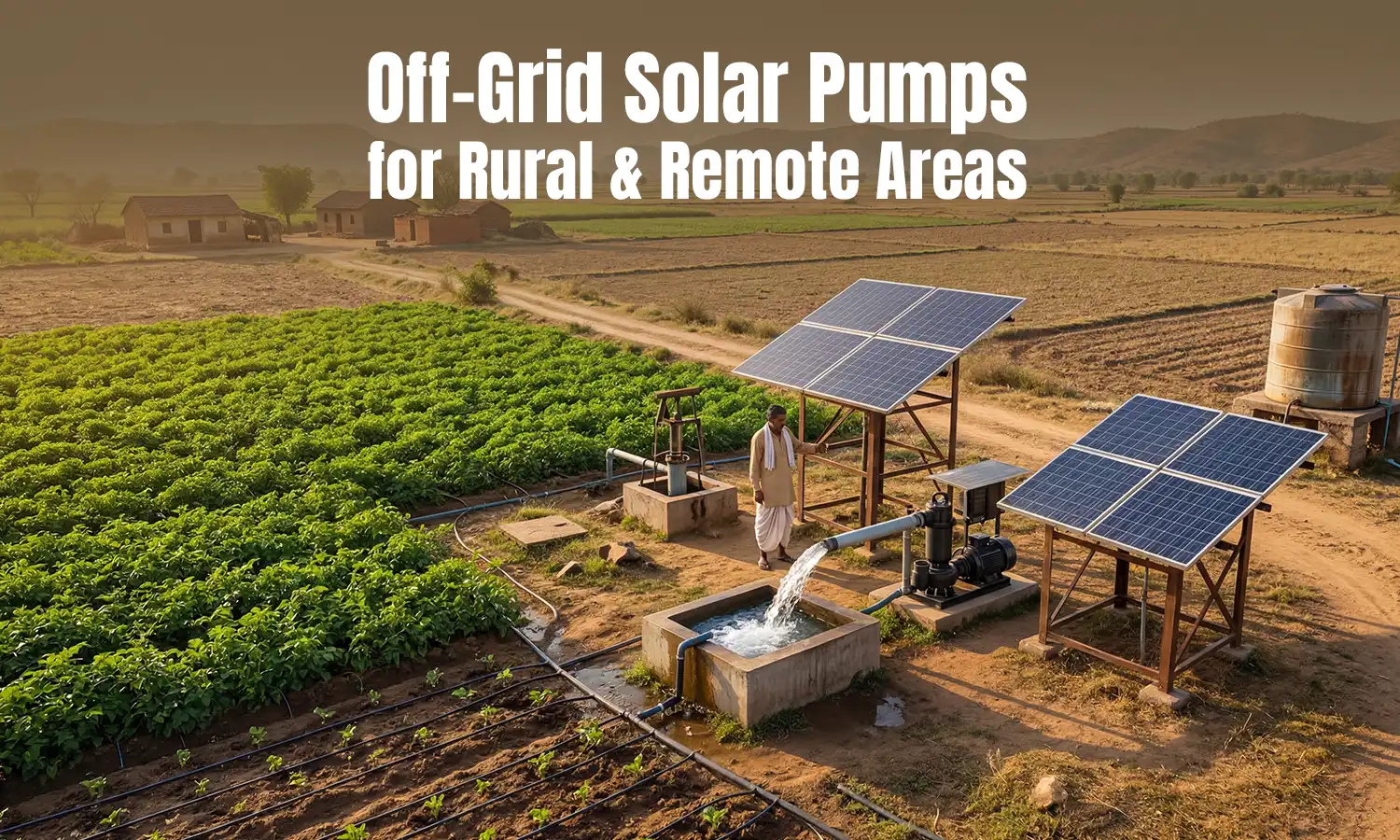
Instead of relying on fuel or power lines, an off-grid water pump uses solar panels to draw energy from the sun, which it then uses to generate the electrical energy necessary for pumping water from sources such as boreholes, rivers, wells, or dams.
A typical off-grid water pump system in Kenya consists of a pump, which can be surface or submersible, solar panels to generate power, a controller to regulate energy flow, and pipes and storage tanks for water distribution.
This kind of system is ideal for farms in remote areas with no access to power lines or infrastructure, as it requires no fuel or connectivity to the grid.
Types of Off-Grid Water Pump Solutions
When choosing the right solar-powered water pump system, you want to match it with your water source and farm needs, as these are the primary factors that determine the right type of solar pumps for farms.
There are primarily three main options as far as off-grid water pumps. Let’s look at each:
Solar surface pumps
These solar pumps for farms are ideal for shallow water sources such as rivers, ponds, and water pans. As such, if your farm has a river crossing through it or is located near a pond, one of these would make the most sense.
Solar surface pumps, such as the Ennos Surface Solar Pump, are generally more affordable and easier to install. However, keep in mind that they are limited in how deep they can draw water.
Solar submersible water pumps
These are solar-powered water pumps designed for boreholes and deep wells. They operate underwater and push water to the surface. If your water needs depend on drawing water from deeper water sources, then these are the ideal solution for you.
Solar submersible water pumps are generally powerful and efficient for deeper water sources.
Hybrid systems (solar + battery)
These systems store their excess solar energy in batteries, allowing them to continue working even after dark, when there is no sunlight, or during cloudy conditions.
This characteristic makes the hybrid off-grid water pump solutions excellent for areas that experience unreliable sunlight, as they are bound to ensure a consistent water supply by continuing to pump in cloudy weather conditions.
While this category of solar-powered irrigation systems typically costs more than their peers, they offer greater flexibility. They do not restrict their use to only when there is sunlight.
When you purchase your off-grid water pump from Irri-Hub, you get the option of buying the unit alone or getting it as part of a complete solar pumping system, tailored to the specific conditions of your farm.
How To Choose the Right Off-Grid Water Pump
When choosing a solar water pump for off-grid use, it is crucial to pay attention to certain factors to ensure optimal performance and cost-effectiveness. Here are some of the factors that farmers should consider:
Water source: Consider whether you’re getting your water from a well, borehole, river, or dam. Shallow water sources will use a surface solar pump, while a deep well or borehole requires a solar submersible water pump.
Depth and distance: This is the measure of how far and how high the water must travel during pumping. Here, you want a system with the right specification for the exact depth and distance to ensure enough power to perform and avoid premature failures.
Water demand: Are you irrigating crops, watering livestock, or both? How you intend to use the system determines the amount of water it will need to pump, hence the flow rate that it must sustain during daylight hours.
Farm size: Naturally, a larger farm will require a higher-capacity solar-powered irrigation system.
Budget: Ultimately, you must pay attention to how much you are willing and able to commit. Be sure to balance your upfront investment with long-term savings. A more durable system may cost more upfront, but save you money in the long run.
Why Farmers Are Switching to Off-Grid Solar Pumping Systems
More farmers, regardless of their access to the national grid, are increasingly adopting off-grid solutions because they directly address key farming challenges in many regions. Let’s break it down.
Lower operating costs
Once installed, an off-grid water pump system runs with minimal ongoing expenses. There is no need for diesel or electricity bills.
Reliable access to water
Solar systems provide a consistent water supply, especially during dry seasons when irrigation is crucial.
Sustainability for remote farms
For farms located far from power lines, solar is often the only viable long-term solution.
Environmental sustainability
Solar energy is clean and renewable, helping farmers reduce their environmental impact.
Original Reliable Solar Water Pumps in Nairobi, Kenya at Irrihub Ke, +254 112 148 880
If you are looking to buy a reliable solar water pump in Kenya, Irrihub has some nice offers you may consider. We sell solar pumps as independent units or as complete solutions (kits). The complete solutions include:
- Submersible brushless pump
- 600W solar panels
- Delivery pipe 25MM
- 70M head
- Flow rate of 2300 L/hr.
- Solar panels
- Pipes and cables
- MPPT controller
- Full installation
Final Thoughts on Off-Grid Water Pump Solutions
An off-grid water pump powered by solar energy offers farmers independence, reliability, and long-term savings. Whether you are irrigating crops, supporting livestock, or expanding your farm operations and therefore need more and reliable water supply, solar pumping systems are your best bet, providing a practical path toward sustainable agriculture.
We hope this article helps make your decision-making easier and guides you toward the right system with proper installation, unlocking greater productivity and resilience in the face of changing climate conditions.