If you decide to go the greenhouse way with your farming, greenhouse building materials represent one area you should never skimp on, as they alone can make or break your structure.
It’s not uncommon to find a farmer investing in a structure, only for something to go wrong within the first year or two. The frame rusts, the cover degrades, the poles shift, the irrigation system underperforms. And the post-mortem always leads to the same place: the materials were wrong, or the quality was cut to bring the price down.
The problem is not greenhouse farming. The problem is what the greenhouse was built from.
Greenhouse building materials are not a secondary concern you figure out after you’ve decided on the structure. They are the structure. What each component is made from determines how well it performs, how long it lasts, and ultimately whether the investment pays off. Here’s what goes into a quality greenhouse and why your choice of greenhouse building materials matters.
The Frame
This is the skeleton of your greenhouse, and among the most crucial of all greenhouse structure materials. Everything else hangs from it or attaches to it. Get the frame wrong and you have a greenhouse that’s fighting you from the first season.
Here are a few options for the frame.
- Galvanized steel
Most greenhouse frames in Kenya are made of galvanized steel, making it among the most popular greenhouse building materials in the country.
Its popularity stems from the fact that steel is strong enough to handle the structural loads a greenhouse faces, including wind pressure on the polythene skin, the weight of rain on the cover, and the tension from properly tensioned covering material.
Galvanization, the treating of steel with a protective zinc coating, provides the corrosion resistance that a farming environment demands.
Galvanized steel frames are known for their exceptional durability, making them ideal for long-term crop cultivation.
- Treated timber
These are some of the lower-cost greenhouse building materials on the market, and an alternative to galvanized steel frames. Pressure-treated wooden poles are accessible, easy to source locally, and workable without specialist equipment.
For a budget-constrained first-time greenhouse farmer, a timber frame is a manageable starting point.
The significant trade-off of these greenhouse building materials is longevity. Wood exposed to soil contact and consistent moisture deteriorates even with treatment, and termite pressure in many parts of Kenya will naturally accelerate that deterioration further.
A timber-framed greenhouse will need more maintenance and earlier replacement than an equivalent steel structure.
The Cover: Polythene, Polycarbonate, or Glass?
The cover is what actually creates the greenhouse effect. It lets light in while slowing the escape of heat, and it protects crops from wind, rain, and pests. The greenhouse cover is also, typically, the most visible component of the structure, which is why it gets a lot of attention.
What it deserves, though, is careful attention to specification.
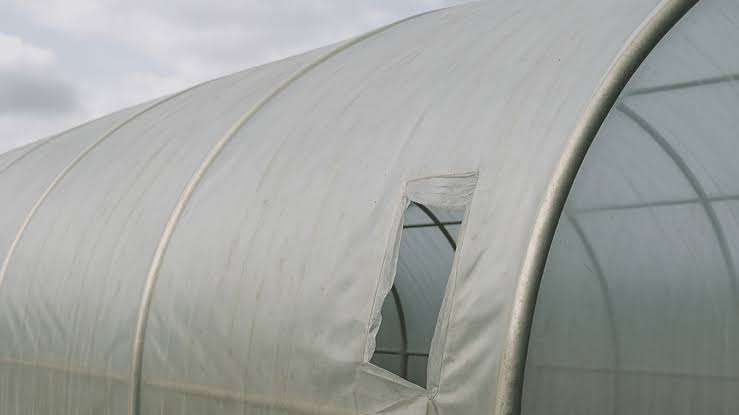
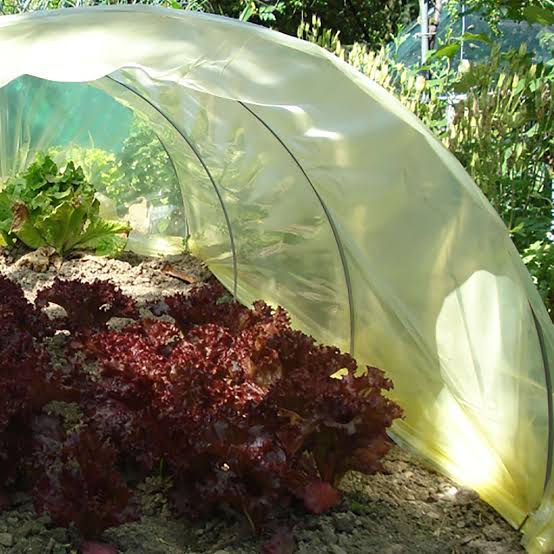
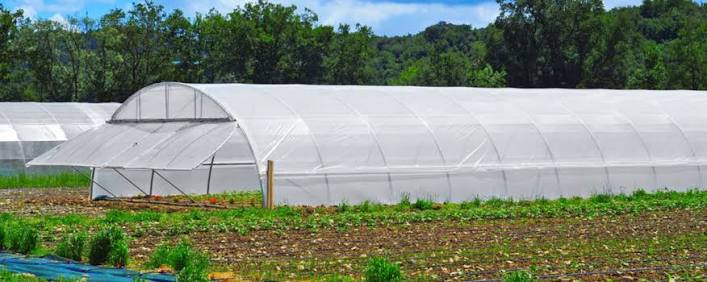
- Polyethylene film (greenhouse polythene)
This is the standard covering material for greenhouse farming in Kenya, and for most Kenyan farmers it is the right choice.
It is affordable, effective at light transmission and heat retention, relatively simple to install and replace, and available in specifications suited to local conditions. The key specification to insist on is 200 microns of thickness for durability, and UV stabilization.
- Polycarbonate panels
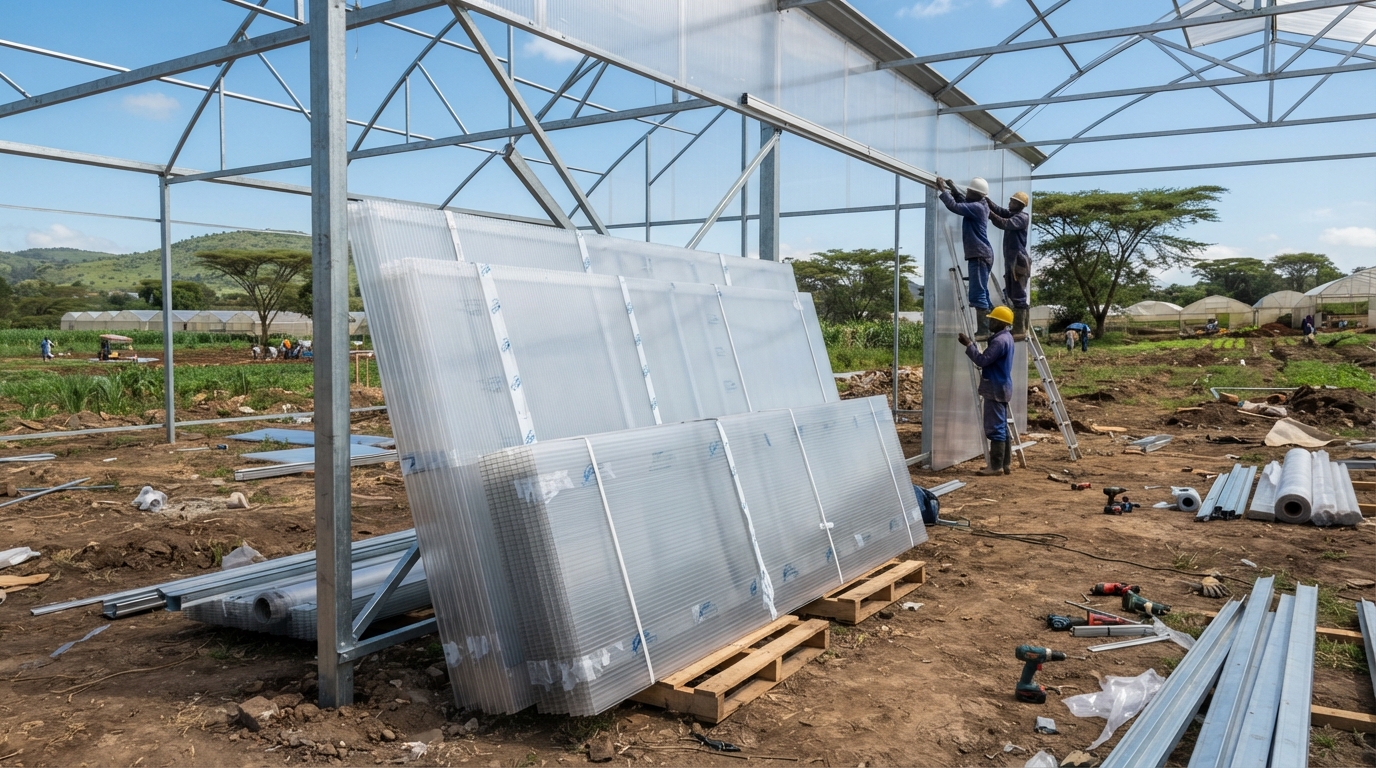
These ones offer better insulation than polythene film and are more rigid and durable as a physical material.
They’re used in more permanent, high-specification greenhouse structures. The trade-off of these greenhouse building materials is cost. Polycarbonate is significantly more expensive than polythene, both in materials and installation complexity.
For most Kenyan farmers building at smallholder or medium commercial scale, polycarbonate is difficult to justify on cost grounds when quality polythene performs adequately.
- Glass
These greenhouse building materials offer the highest light transmission of any covering material and an impressive lifespan, but the weight of glass requires a heavier frame to support it. Furthermore, glass is expensive and fragile in a working farm environment.
Glass greenhouses are most common in very high-value, high-tech horticultural operations; not the typical starting point for a Kenyan farmer investing in protected growing.
Anchor Points and Foundation
This is the component that gets the least attention and causes some of the most expensive problems when it is done poorly.
The frame of a greenhouse takes significant lateral force from wind acting on the cover. If the base of each upright pole isn’t anchored firmly enough to resist that force, the structure shifts, leans, and eventually fails.
Concrete footings at each vertical post are the correct approach for a permanent or semi-permanent greenhouse. The foundation must resist overturning and vertical pressure from structural loads, and concrete is the most appropriate greenhouse building material for this purpose.
Irrigation Components
A greenhouse without an irrigation system is a structure that’s already compromising its own potential. The enclosed environment of a greenhouse means rainfall is excluded from the growing equation entirely. All water must be delivered deliberately and consistently.
Drip irrigation is the standard for greenhouse crop production: it delivers water directly to the root zone, keeps foliage dry to reduce disease risk, and gives the farmer precise control over the delivery of moisture.
The components involved include a main supply pipe from the water source, sub-mains running along the length of each bed, drip lines with emitters at each plant, and pressure regulation equipment to ensure consistent flow across the full irrigation system.
Insect Netting
Often overlooked as a greenhouse building material but genuinely important: insect netting installed at ventilation openings; end wall vents, ridge vents, roll-up side wall openings, prevents flying insects from entering the structure while still allowing the exchange of air.
Whiteflies, thrips, and aphids are the pests that cause the most damage in Kenyan greenhouse crops, and they are all flying insects. Excluding them at the point of entry is far more effective than treating infestations after they’ve established inside the structure.
The netting must be fine enough to exclude the target pests without blocking so much airflow that ventilation is compromised.
Mesh specifications vary, and choosing the right one for the pest pressure in your area is worth discussing with your installer.
Original Reliable Greenhouses in Nairobi, Kenya at Irrihub Ke, +254 112 148 880
If you are looking to buy reliable, high-quality greenhouses in Kenya, Irrihub has some nice offers you may consider. We sell greenhouses and other growing solutions as independent units or as complete solutions (kits). The complete greenhouse solutions include:
- A galvanized steel structure
- 200-micron polythene cover (clear or yellow)
- Zig-zag fastening wires to hold the cover against the wind
- Roll up side ventilation with white insect net
- Entry porch
- Full drip irrigation system
- Water tank (size depends on greenhouse tier)
- 2-year warranty on structure and materials
- Optional crop support structure for climbing crops
Conclusion On Greenhouse Building Materials
Every component of a greenhouse has a specification that’s adequate and a specification that’s cut to be cheap. The cheap specifications for greenhouse building materials cost less today and more over the life of the structure.
A frame that rusts in five years, a cover that needs replacing in two, an irrigation system that underperforms from the first season: these are costs that arrive later but are entirely predictable from the materials chosen at the start.
Greenhouse building materials are not the place to negotiate the price down. They’re where you buy yourself the performance and longevity that make the investment worthwhile.