Self-Watering Wall Planters: How Passive Irrigation Supports Vertical Gardens
Vertical gardens are visually stunning and space-efficient, but watering them properly can be the real challenge. This is why self-watering wall planters are such a breath of fresh air: they integrate passive irrigation into the planter design, helping maintain moisture levels with minimal manual intervention.
Unlike traditional ground beds, plants in a vertical setup tend to dry out faster due to increased air circulation and limited volume of soil. Water often runs downward unevenly, leaving upper plants thirsty while lower ones become overwatered.
Consistent irrigation is critical to the health of any plant. Distinctly fluctuating moisture levels can cause root stress, poor growth, nutrient deficiencies, and even plant death.
In this article, we explain how self-watering wall planters work, why they are ideal for vertical garden systems, and how best to approach getting one for your purposes.
What Are Self-Watering Wall Planters
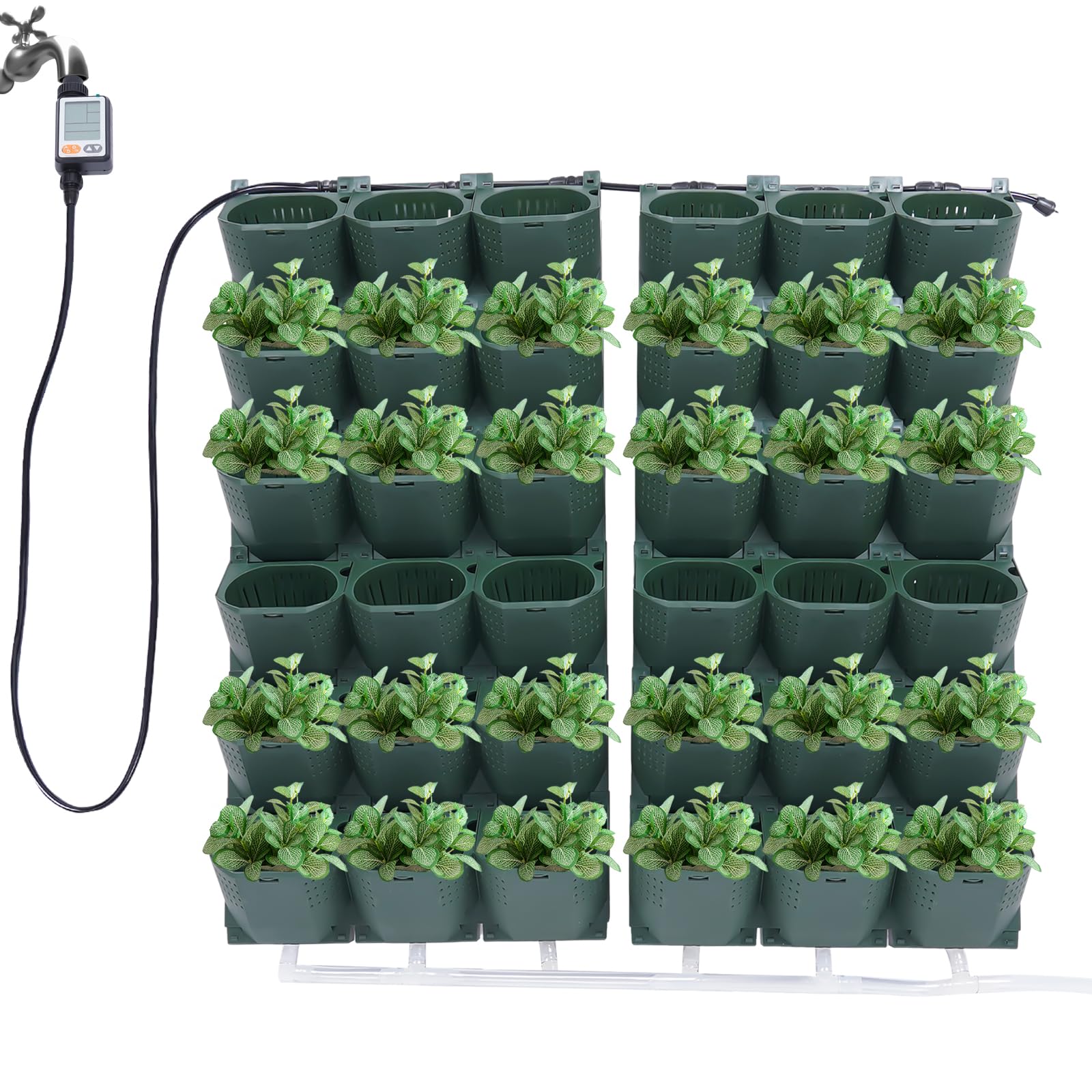
Self-watering wall planters are vertically mounted planting systems with built-in water reservoirs. Instead of relying solely on surface watering, these planters deliver moisture gradually to plant roots through a passive irrigation mechanism.
Unlike standard vertical garden posts, which depend entirely on manual watering or an external vertical garden irrigation system, self-watering wall planters store water within the unit itself. This allows plants to draw moisture as needed rather than being subjected to inconsistent watering cycles.
How Passive Irrigation Works in Vertical Gardens
Self-watering wall planters typically include the following to enable their passive irrigation mechanism:
- A water reservoir at the base or back of the unit
- A wicking mechanism or soil column that connects the reservoir to the planting medium
- Overflow protection to prevent waterlogging
Water reservoirs
The reservoir stores water separately from the soil. This prevents oversaturation while ensuring a steady supply of moisture.
Capillary action and wicking
Water moves upward from the reservoir into the soil through capillary action with the help of wicks or specially designed channels that help transport moisture gradually to the soil around the plant roots. plants then absorb water through their root systems as needed.
Controlled moisture delivery
Because self-watering wall planters deliver water to plants from below rather than being poured from above, the soil maintains a stable moisture level, reducing dramatic wet-dry cycles that stress plants.
Key Benefits of Self-Watering Wall Planters
The fact that self-watering wall planters do not require manual watering to sustain themselves is not the only advantage. Let’s look at more.
- Water efficiency and conservation
Since these wall planters store and reuse water within their system rather than letting it run off, they effectively reduce wastage. Moisture is delivered only as plants need it, improving overall efficiency.
- Consistent plant growth
The system ensures steady hydration, which supports steady nutrient uptake. This way, there are fewer wilting cycles, less transplant shock, and more uniform growth across the vertical surface.
- Reduced maintenance and labor
Self-watering systems significantly cut down on daily watering routines. Instead of watering every day, you may only need to refill the reservoir periodically.
- Healthier root systems
Because the soil maintains a balanced moisture level, roots receive both water and oxygen. This watering approach greatly reduces or eliminates overwatering, one of the most common mistakes in vertical gardens.
Self-Watering Vs Manual Irrigation in Vertical Gardens
Manual irrigation is a more common way to water vertical gardens. It is even recommended for smaller vertical garden setups over automated irrigation. In this section, we look at how self-watering compares to manual irrigation.
- Performance
Manual watering can lead to inconsistency, with some plants getting more water than others. Notice, however, that this is rare in small vertical gardens.
For a more elaborate setup, a dedicated vertical garden irrigation system with drip lines can improve the performance of your watering system, even though it requires installation, plumbing, and some level of maintenance.
This is perhaps why many people prefer to work with companies like IrriHub that offer the installation service along with the product.
- Cost and labor
While self-watering planters may have a higher upfront cost than basic vertical gardens, they naturally reduce long-term labor and water waste.
Manual watering is characterized by spillage and human input that constitutes labor and wastage of water.
- Reliability
Passive irrigation does not depend on electricity, timers, or water pressure. As long as the reservoir is filled, the system continues to work.
For larger installations or projects requiring higher plant density, combining modular vertical garden structures with efficient irrigation design, whether passive or drip-assisted, often delivers better reliability and scalability than standalone self-watering planters.
This hybrid approach allows growers to maintain moisture consistency while benefiting from stronger structural systems, easier maintenance, and long-term flexibility.
Reliable Vertical Garden Systems in Nairobi, Kenya at Irrihub Ke, +254 112 148 880
If you are looking to set up a high-quality vertical garden system in Kenya, IrriHub offers a wide range of vertical garden products that can be supplied as independent vertical gardens or as complete vertical garden solutions. Our complete vertical garden solutions typically include:
- Modular vertical gardens
- Mounting hardware
- Micro drip irrigation kit
- HDPE main and sub-main piping
- Precision driplines or drip buttons
- Filtration unit
- Water storage tank (where required)
- Installation guidance and technical support
Final Thoughts
Water management is crucial in vertical gardening, especially if you live in a place with water scarcity problems.
With the right combination of irrigation design and structured vertical garden systems, passive watering can transform both small home installations and large commercial projects into thriving, low-maintenance green spaces.
Choosing modular, professionally designed vertical garden setups ensures long-term reliability, scalability, and better overall performance, especially in urban and commercial environments.